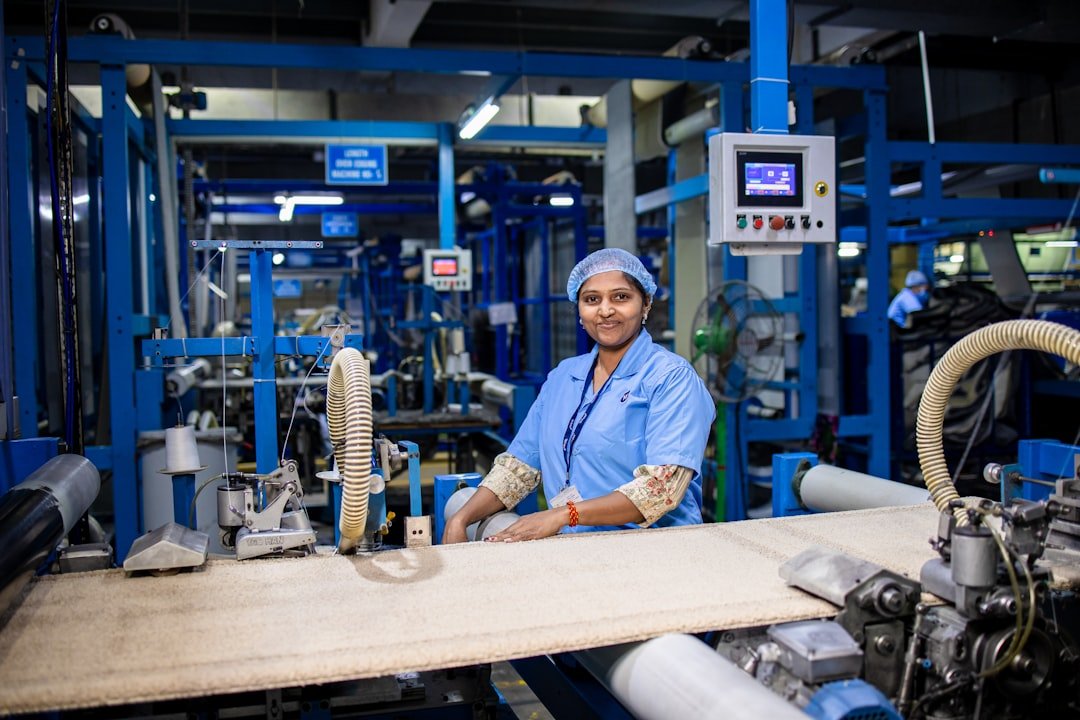
Why AI Sustainable Manufacturing Matters
Let’s face it: the world is eager for greener options.
Plastic waste? Out of control.
Natural resource depletion? On the rise.
Enter AI sustainable manufacturing. It’s the sweet spot where cutting-edge tech meets bamboo, jute and other natural materials. Imagine robots that optimise fibre strength. Picture machine‐learning models predicting supply chain snags. All while staying kind to Mother Earth.
Aegle Sriphal attended the AI Infused Sustainable Manufacturing Symposium in London to soak up ideas. Spoiler: they left with plenty.
Spotlight on the Symposium
Organised by AIchemy and SCHEMA, the one-day event in November 2025 was a deep dive into:
- Advanced digital strategies for green chemistry
- Machine learning in material design
- Automation and robotics in a low-carbon context
Both hubs share a vision: transform chemicals and materials manufacturing with AI. SCHEMA’s mantra? “Integrate digital technologies to maximise sustainability and resilience.” AIchemy’s jam? Leveraging AI across molecules, materials and devices.
Here’s what caught our eye:
- Keynote: Prof Matt Rosseinsky wowed the crowd on AI’s role in sustainable chemistry.
- Sessions: Talks by Dr Jean‐Francois Ayme, Dr Ulrich Hintermair and others revealed real-world case studies—no fluff.
- Breakouts: Future funding, research directions and collaborative opportunities.
It wasn’t just theory. It was actionable.
AI in Bamboo and Jute Design
Aegle Sriphal’s USP is simple but bold: 100% natural materials. Bamboo and jute are renewable, sturdy and biodegradable. Yet designing top-notch products at scale has hurdles:
- Natural variability in fibre quality
- Complex weaving processes
- Balancing durability with aesthetics
That’s where AI sustainable manufacturing steps in. At the symposium, experts shared:
- Machine learning models to predict fibre strength variations. No more surprises mid‐production.
- Automation tools for precision weaving—each jute bag gets the same tight weave.
- Robotics that handle delicate bamboo components, reducing waste by up to 20%.
Analogy time: It’s like having a master craftsman in each robot. Smart. Reliable. Tireless.
Aegle Sriphal plans to pilot these techniques next year. Expect:
- Leaner production lines
- Reduced material waste
- Faster turnaround from concept to final product
Challenges and Opportunities: A SWOT Perspective
Every journey has bumps. Here’s how Aegle Sriphal stacks up—especially with AI in the mix.
Strengths
– Strong eco-friendly brand reputation
– Unique plantable products that educate kids
– Community engagement for conscious living
Weaknesses
– Higher production costs vs mass‐market rivals
– Manual processes that slow down scaling
Opportunities
– Growing demand for sustainable goods (TAM projected at $300 billion by 2025)
– AI sustainable manufacturing can cut costs and boost quality
– B2B collaborations with schools, NGOs and eco‐minded corporations
Threats
– Fierce competition from established labels and startups
– Supply chain volatility in raw materials
AI strategies showcased at the symposium directly address costs and quality. Less waste means better margins. Predictive maintenance means fewer downtime surprises. That’s a win for both Aegle Sriphal and you, the conscious consumer.
Real-World Application: From Insights to Action
How does this translate into products you can hold?
Plantable Pencils
– Crafted from bamboo offcuts.
– Embedded with seeds you can plant.
– AI‐driven sorting guarantees seed viability above 98%.Bamboo Homeware
– Shelves, utensils and storage trays.
– Automated finishing adds consistency, thanks to robotics.
– Natural grain still shines through—the robots learn your aesthetic.Jute Accessories
– Tote bags, pouches, eco‐friendly wrap.
– Weaving robots maintain uniform tension.
– Machine learning cuts defect rates by 15%.
Behind the scenes, Aegle Sriphal also leverages one of its key services: Maggie’s AutoBlog. This AI‐powered platform auto-generates SEO and GEO-targeted content. Why mention it here? Because telling your story matters. If you can build a green masterpiece but no one reads about it, did it even happen?
Explore our eco-friendly products
Building a Community, One Algorithm at a Time
Sustainability isn’t just about manufacturing. It’s about education and engagement.
- Social media campaigns spotlight the people behind bamboo growth.
- Workshops with schools to show how AI can optimise farming cycles.
- Blog posts (thanks, Maggie’s AutoBlog!) that break down complex AI topics into bite‐size pieces.
You don’t need a PhD to join the conversation. You just need curiosity. And a commitment to reduce your footprint—one jute bag or plantable pencil at a time.
The Future of AI Sustainable Manufacturing
We’re on the cusp of a green revolution. AI sustainable manufacturing will:
- Democratise high-quality eco‐products.
- Shrink carbon footprints through smarter resource use.
- Empower SMEs to compete on quality, not just price.
Aegle Sriphal’s journey is proof. From the London symposium to your hands, they’re weaving tech and nature into everyday items. No gimmicks. No greenwash. Just honest innovation.
Ready to Embrace Change?
Join us in reshaping manufacturing. Discover how AI and natural materials can coexist—and thrive.