Plastic has quietly become a part of almost every Indian household. From kitchen containers and toothbrushes to storage boxes and cutlery, plastic dominates because it is cheap, lightweight, and easily available. However, over the last few years, awareness around environmental damage and health risks has forced consumers to rethink this dependency.
As more families explore sustainable alternatives, one question repeatedly emerges — is bamboo truly better than plastic for daily use in Indian homes?
Let us examine this comparison from environmental, health, durability, and economic perspectives.
Environmental Impact – A Long-Term Perspective
Plastic is derived from petroleum, a non-renewable fossil fuel. The manufacturing process consumes high energy and releases greenhouse gases. After use, plastic often ends up in landfills, rivers, or oceans, where it may take hundreds of years to decompose.
India generates millions of tonnes of plastic waste annually, and despite recycling efforts, a significant portion remains unmanaged. Microplastics have now entered soil, drinking water, and even food chains.
Bamboo, on the other hand, is one of the fastest-growing natural resources in the world. It matures within 3–5 years and regenerates after harvesting without needing replantation. Additionally:
- Bamboo absorbs higher levels of carbon dioxide compared to many tree species
- It releases more oxygen
- It grows without heavy pesticide use
- It prevents soil erosion
At the end of its lifecycle, untreated bamboo products decompose naturally without leaving toxic residues.
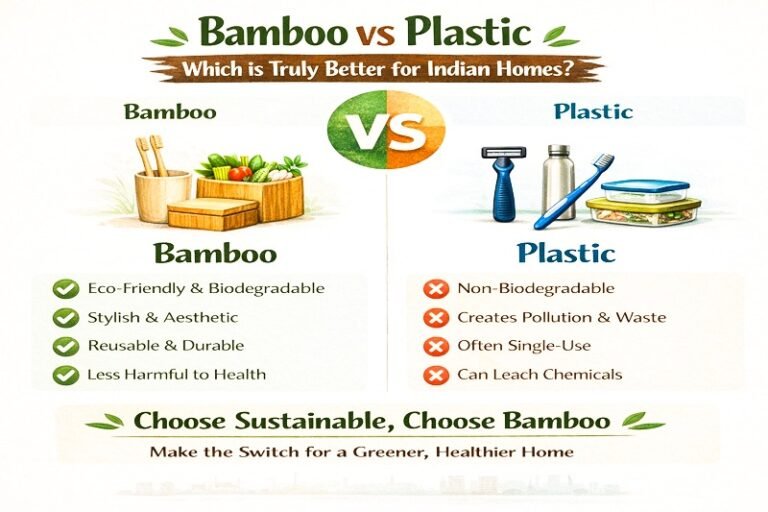
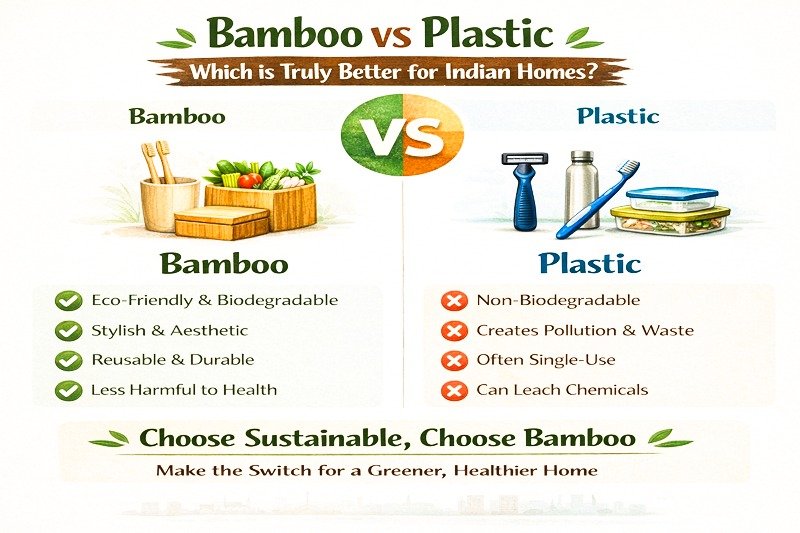
From an environmental standpoint, bamboo presents a significantly lower ecological burden than plastic.
Health and Safety Considerations
Plastic products, especially low-cost variants, may contain chemicals such as BPA (Bisphenol A) and phthalates. While regulatory standards exist, prolonged exposure to certain plastics — especially in food-related applications — raises concerns among health-conscious consumers.
For example, plastic containers exposed to heat may release microplastics or chemicals into food. Scratched or worn plastic surfaces can also harbor bacteria.
Bamboo products are naturally free from synthetic chemicals. When properly processed and finished with food-safe coatings, bamboo kitchen items provide a safer alternative for food preparation and storage.
Additionally, bamboo has natural antibacterial properties, which can contribute to better hygiene when maintained correctly.
For Indian families increasingly prioritizing wellness, this health dimension plays a critical role in purchase decisions.
Durability and Everyday Performance
One common misconception is that eco-friendly alternatives compromise on strength. In reality, high-quality bamboo is remarkably strong and flexible. It has been used historically in construction, furniture, and structural frameworks.
In daily household use, bamboo products:
- Resist moderate impact
- Maintain structural integrity
- Do not warp easily when kept dry
- Offer long service life with basic care
Plastic, although lightweight and waterproof, often becomes brittle over time. Cheap plastic products crack, stain, or discolor with regular use, especially in Indian kitchen conditions where exposure to heat and spices is frequent.
When comparing lifecycle durability, bamboo often matches or exceeds low-to-mid grade plastic items.
Aesthetic and Lifestyle Value
Beyond function, consumer preferences are shifting toward aesthetics. Modern Indian homes increasingly blend minimalism with natural textures. Bamboo products introduce warmth and organic appeal that plastic simply cannot replicate.
Natural grain patterns, subtle color tones, and handcrafted finishes elevate everyday items from purely functional objects to lifestyle statements.
For environmentally aware households, using bamboo products also reflects personal values. It communicates responsibility, awareness, and alignment with sustainable living.
Cost Analysis – Short Term vs Long Term
Plastic’s biggest advantage is its low upfront cost. However, repeated replacements increase total expenditure over time. Additionally, environmental costs — though indirect — are substantial.
Bamboo products may carry slightly higher initial pricing due to material quality and sustainable sourcing. However:
- They last longer
- They reduce replacement frequency
- They align with long-term sustainability goals
As demand increases and production scales, bamboo products are becoming increasingly accessible in Indian markets.
Viewed through a long-term lens, bamboo offers stronger value retention.
The Practical Approach – Gradual Transition
Switching from plastic to bamboo does not require a complete overhaul of your home. A practical approach includes:
- Replacing plastic items as they wear out
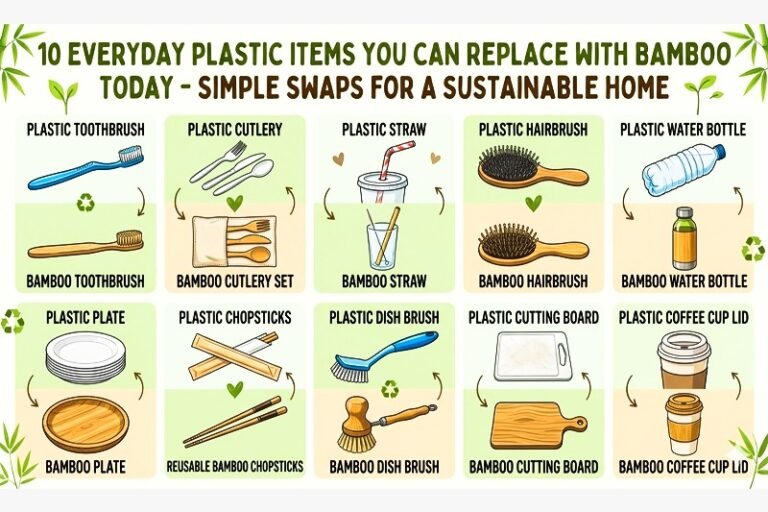
- Starting with high-frequency products like toothbrushes and kitchen tools
- Choosing durable, well-crafted bamboo alternatives
- Maintaining products properly to extend lifespan
Small, consistent changes create meaningful environmental impact over time.
Conclusion
When comparing bamboo vs plastic for Indian homes, bamboo demonstrates clear advantages in sustainability, health safety, durability, and aesthetic appeal. Plastic may continue to serve certain industrial functions, but for everyday household items, bamboo presents a responsible and future-ready alternative.
As environmental awareness grows across India, conscious material choices will define the next generation of consumer habits. Bamboo is not merely an alternative — it represents a shift toward mindful living.
Frequently Asked Questions
Q1: Is bamboo stronger than plastic for kitchen use?
High-quality bamboo is strong enough for most kitchen applications such as chopping boards, spatulas, and cutlery. It performs reliably under normal household conditions.
Q2: Are bamboo products completely plastic-free?
Most bamboo products are primarily natural. However, some items may use minimal binding agents or coatings. Always check product specifications for details.
Q3: Do bamboo products absorb water easily?
Bamboo is naturally porous but becomes durable when properly treated. Keeping it dry after washing helps maintain longevity.
Q4: Is bamboo more expensive than plastic?
Initial cost may be slightly higher, but longer durability often makes bamboo more economical over time.
Q5: Can bamboo products survive Indian climate conditions?
Yes. When stored in dry areas and cleaned properly, bamboo products perform well in Indian humidity and temperature variations.
Q6: Are bamboo products biodegradable?
Untreated bamboo decomposes naturally and does not leave harmful residues like plastic.