Sustainable living often sounds overwhelming. Many people assume it requires drastic lifestyle changes, expensive purchases, or extreme minimalism. In reality, sustainable living in India can begin with small, practical steps that fit naturally into everyday routines.
For modern Indian households, the goal is not perfection — it is progress. By making mindful decisions in daily consumption, waste generation, and product choices, families can significantly reduce their environmental footprint without disrupting comfort or convenience.
This guide breaks down sustainable living into simple, achievable actions that anyone can implement.
Understanding Sustainable Living in the Indian Context
Sustainable living means using resources responsibly so that future generations can meet their needs. In India, this becomes especially important due to:
- Growing urban waste
- Rising plastic pollution
- Water scarcity in many regions
- Increasing energy consumption
The average urban household generates substantial non-biodegradable waste every month. However, a large portion of this waste comes from avoidable single-use plastics and disposable products.
By replacing frequently used items with durable, eco-friendly alternatives, households can gradually reduce waste without sacrificing practicality.
Step 1 – Start with Your Kitchen
The kitchen is one of the highest waste-generating areas in Indian homes. Simple sustainable swaps here create immediate impact.
Practical Kitchen Changes
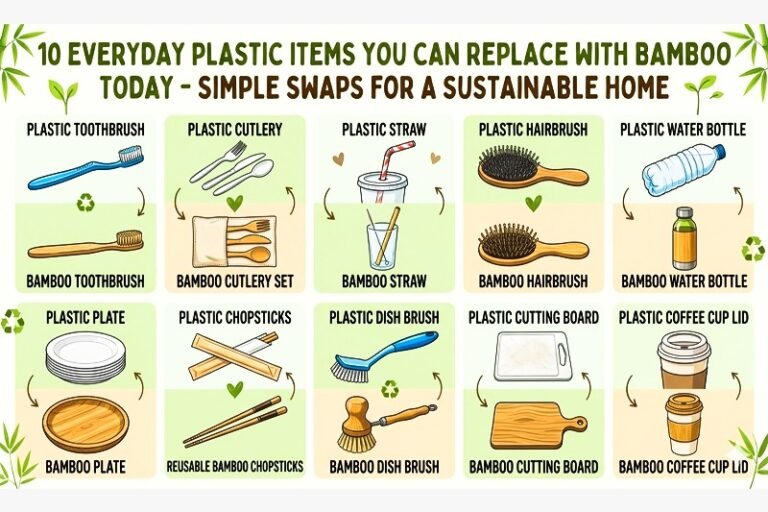
- Replace plastic spatulas and spoons with bamboo alternatives
- Choose reusable containers instead of single-use storage bags
- Opt for durable chopping boards made from natural materials
- Avoid disposable cutlery and straws
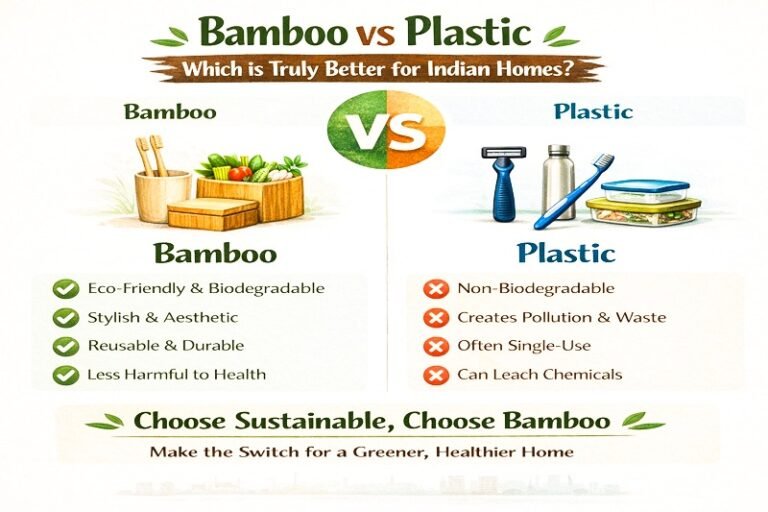
Kitchen tools made from renewable materials not only reduce waste but also add aesthetic warmth to your space. Unlike plastic, natural materials do not release harmful micro-particles when exposed to heat.
Even small replacements in the kitchen can reduce yearly plastic waste significantly.
Step 2 – Reconsider Bathroom Essentials
The bathroom often contains hidden plastic consumption — toothbrushes, combs, disposable razors, and product packaging.
Simple Bathroom Swaps
- Switch from plastic toothbrushes to bamboo toothbrushes
- Choose refillable containers
- Avoid excessive single-use personal care products
- Use reusable storage organizers
These changes are easy to implement because they do not require altering habits — only replacing materials.
Step 3 – Adopt Mindful Buying Habits
Sustainable living is not only about materials; it is also about consumption patterns.
Before purchasing any item, consider:
- Is it durable?
- Is it reusable?
- Is it made from renewable or biodegradable material?
- Will it reduce future waste?
Choosing fewer, better-quality products often saves money in the long term while minimizing environmental impact.
Step 4 – Sustainable Gifting and Festive Practices
India celebrates numerous festivals and events throughout the year. Unfortunately, these occasions often generate excessive packaging waste.
A more sustainable approach includes:
- Choosing reusable gift items
- Avoiding plastic wrapping
- Selecting eco-conscious home and lifestyle products
- Supporting brands that prioritize responsible sourcing
Sustainable gifting not only reduces waste but also spreads awareness among friends and family.
Step 5 – Build Gradual, Long-Term Habits
One common mistake is attempting to transform everything at once. This often leads to frustration and abandonment of sustainable goals.
Instead:
- Replace products only when they wear out
- Track monthly waste reduction
- Encourage family members to participate
- Focus on consistency rather than speed
Sustainable living is a long-term mindset, not a short-term trend.
Why Small Changes Matter
If one household reduces even 20–30% of its plastic consumption annually, the cumulative impact across thousands of homes becomes significant.
India’s sustainability movement is growing rapidly. Consumers are increasingly aware that everyday purchasing decisions influence environmental outcomes.
Switching to renewable materials such as bamboo for daily-use products is one of the simplest ways to begin this transition. These choices combine functionality, durability, and responsibility — making sustainable living realistic rather than idealistic.
The Bigger Picture – From Individual Action to Cultural Shift
Sustainability begins at home but influences broader communities. When consumers choose eco-friendly alternatives, demand shifts. As demand grows, more businesses adopt sustainable practices, reducing overall environmental impact.
This ripple effect is essential for India’s future environmental health.
You do not need to eliminate plastic overnight. You simply need to begin.
Frequently Asked Questions
Q1: How can I start sustainable living without spending too much?
Start by replacing items only when necessary. Choose durable alternatives rather than buying new products immediately.
Q2: Is sustainable living practical in Indian cities?
Yes. Many eco-friendly products are now widely available and affordable in urban markets.
Q3: Do eco-friendly products last as long as regular products?
High-quality sustainable products often last longer because they are built for durability rather than disposability.
Q4: What is the easiest first swap for beginners?
Switching from plastic toothbrushes and kitchen tools to bamboo alternatives is a simple starting point.
Q5: Does one household’s effort really make a difference?
Yes. Collective individual actions create measurable environmental change over time.
Q6: Is sustainable living only about avoiding plastic?
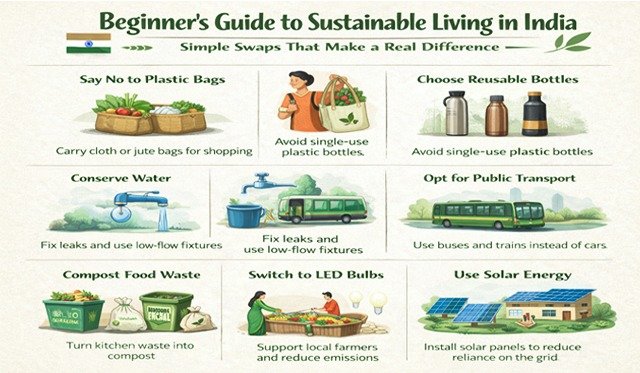
No. It includes mindful consumption, reducing waste, conserving energy, and choosing renewable materials.