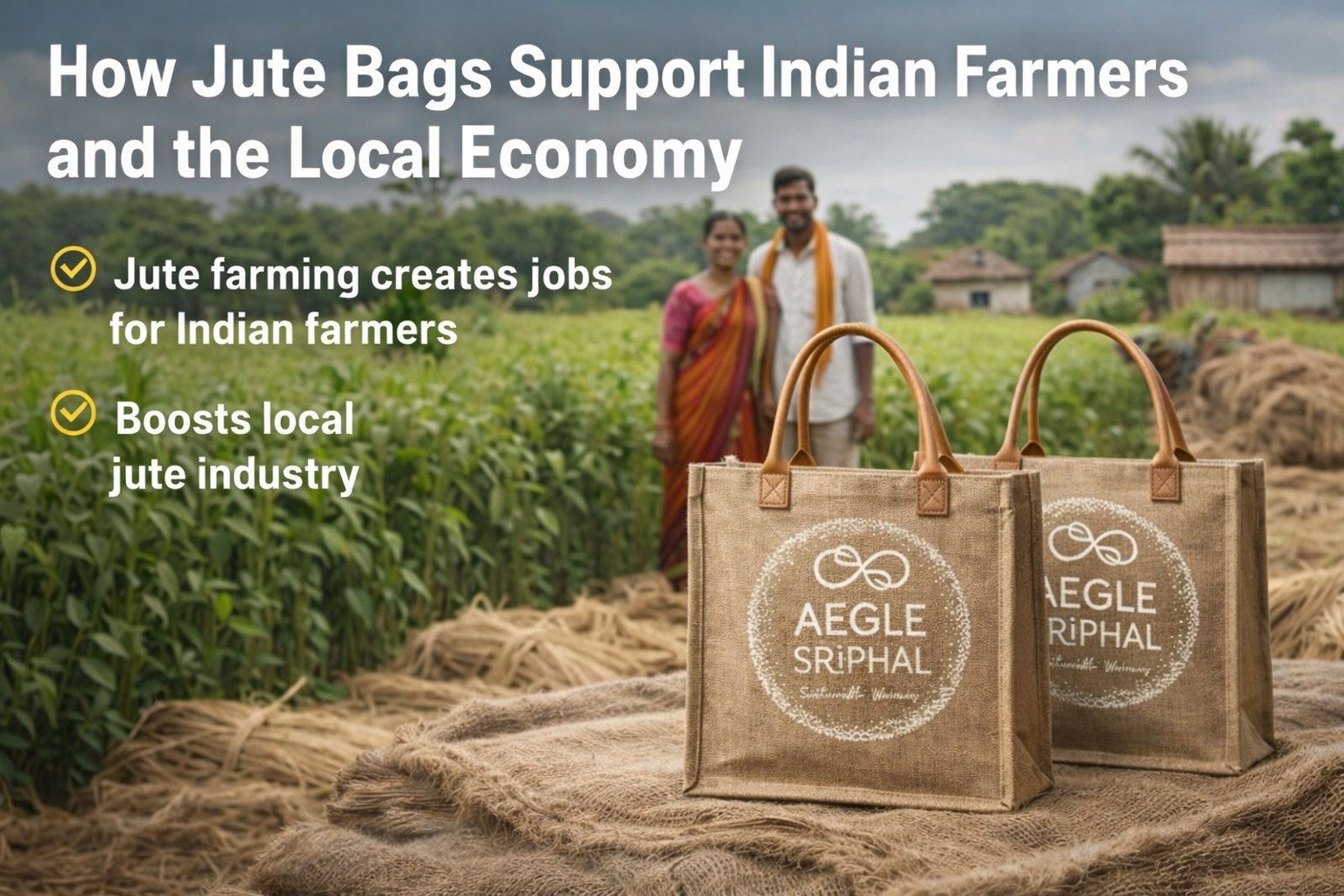
Sustainability is often discussed in terms of environmental benefits — reducing plastic, cutting emissions, and minimizing waste. However, true sustainability also includes social and economic dimensions. When consumers choose eco-friendly materials, they influence not just the planet but also livelihoods.
In India, choosing jute bags does more than reduce plastic usage. It directly supports farmers, rural workers, and traditional industries that form an important part of the country’s agricultural ecosystem.
Understanding this connection adds deeper meaning to everyday shopping decisions.
India’s Position in the Global Jute Industry
India is one of the largest producers of jute in the world. The crop is primarily cultivated in eastern states such as West Bengal, Bihar, Assam, and Odisha.
The jute industry supports:
- Lakhs of small and marginal farmers
- Rural laborers
- Processing units
- Textile workers
- Export businesses
When demand for jute products increases, it strengthens this entire supply chain.
Unlike petroleum-based plastic manufacturing, which is centralized and industrial, jute cultivation is deeply connected to rural economies.
A Crop That Benefits Farmers
Jute is often referred to as the “golden fiber” because of its economic importance.
Why farmers prefer jute cultivation:
- Short crop cycle (around 4–6 months)
- Minimal fertilizer requirements
- Lower pesticide dependency
- Rain-fed growth in many regions
- Improves soil health for future crops
Because jute requires relatively fewer agricultural inputs compared to certain other cash crops, it reduces financial risk for farmers.
In addition, jute cultivation provides seasonal employment opportunities in rural areas.
Employment Beyond Farming
The economic impact of jute does not stop at cultivation.
After harvesting, the fiber undergoes:
- Retting
- Processing
- Spinning
- Weaving
- Stitching
- Printing and customization
This creates employment in mills, small-scale industries, and handicraft sectors.
The jute industry supports both organized and unorganized labor sectors, offering livelihoods to thousands of families.
When consumers purchase jute bags, they contribute to sustaining these employment networks.
Encouraging Sustainable Agriculture
Jute cultivation has environmental advantages that indirectly support farming sustainability:
- It enriches soil fertility
- Leaves organic matter behind
- Requires fewer chemical treatments
- Helps in crop rotation
This makes it an environmentally regenerative crop compared to resource-intensive alternatives.
As global awareness grows around sustainable agriculture, jute positions itself as a responsible agricultural commodity.
Reducing Dependence on Imported Materials
Plastic production relies heavily on petroleum derivatives. While India produces plastic domestically, raw materials are often connected to fossil fuel supply chains.
Jute, by contrast, is locally grown.
Promoting jute products strengthens domestic agriculture and reduces reliance on imported synthetic alternatives.
This strengthens the local economy while lowering environmental impact.
Boosting Rural Women’s Employment
In many regions, women play an important role in jute processing and bag stitching.
Handcrafted jute products often support self-help groups (SHGs) and small-scale rural enterprises. By choosing jute bags, consumers indirectly empower these communities.
Sustainable purchasing decisions can therefore have a social equity dimension.
Corporate and CSR Implications
Businesses that adopt jute bags for packaging or corporate gifting not only reduce plastic waste but also contribute to rural economic growth.
This dual benefit strengthens corporate social responsibility narratives and ESG commitments.
Supporting domestic fiber industries aligns with “Make in India” and sustainable development goals.
Long-Term Economic Sustainability
As plastic regulations tighten and environmental awareness increases, demand for eco-friendly alternatives is likely to rise.
This growing demand can stabilize and expand the jute industry, ensuring long-term income security for farmers and workers.
By choosing jute bags, consumers are not just buying a product — they are participating in a larger economic ecosystem.
Conclusion
Jute bags represent more than a plastic alternative. They symbolize a sustainable economic cycle — from farm to finished product.
Supporting jute means:
- Encouraging rural livelihoods
- Strengthening local industries
- Promoting sustainable agriculture
- Reducing environmental harm
In a country like India, where agriculture remains a backbone of the economy, conscious consumption can play a meaningful role in rural development.
Every reusable jute bag carries a story — not just of sustainability, but of community support and economic resilience.
FAQs
Q1: How does buying jute bags help farmers?
Increased demand supports cultivation, processing, and rural employment linked to the jute industry.
Q2: Is jute farming environmentally friendly?
Yes. It requires fewer chemicals and improves soil quality.
Q3: Does the jute industry provide rural jobs?
Yes. It supports farming, weaving, stitching, and small-scale manufacturing.
Q4: Is jute production better for the Indian economy than plastic imports?
Jute strengthens domestic agriculture and reduces reliance on fossil-fuel-based materials.
Q5: Are jute products part of sustainable development goals?
Yes. They align with environmental and rural economic sustainability objectives.
Are Jute Bags Waterproof? Care, Maintenance & Durability Guide
When choosing reusable shopping bags, one common question arises — are jute bags waterproof?
This concern is practical. Indian shopping often involves carrying vegetables, groceries, and items exposed to varying weather conditions. Understanding how jute behaves under moisture helps consumers make informed decisions.
Let us examine the facts.
Is Jute Naturally Waterproof?
Jute is a natural plant fiber. By nature, it is breathable and porous. This means:
- It is not fully waterproof
- It absorbs moisture to some extent
- It allows air circulation
While this makes it excellent for carrying fresh produce, it also means prolonged exposure to water is not recommended.
Laminated Jute Bags
Many modern jute bags come with an inner laminated lining.
Benefits of laminated variants:
- Increased moisture resistance
- Better structural stability
- Suitable for carrying groceries
- Enhanced durability
These are ideal for daily shopping, especially during monsoon seasons.
How Jute Handles Moisture
Short-term exposure to moisture — such as carrying vegetables — is generally not a problem.
However, soaking jute bags in water for long periods can:
- Weaken fibers
- Cause odor
- Reduce lifespan
Proper care ensures durability.
Maintenance Tips for Long Life
To maximize usage:
- Avoid machine washing
- Do not soak in water
- Spot clean using damp cloth
- Air dry completely
- Store in dry, ventilated areas
With basic care, jute bags can last for years.
Durability Under Regular Use
Despite moisture sensitivity, jute is highly durable for daily shopping.
It offers:
- Strong stitching
- Reinforced handles
- High load capacity
- Resistance to tearing
When compared to thin plastic bags that rip easily, jute provides superior strength.
Can Jute Bags Be Used in Rain?
Light exposure to rain is manageable if the bag is dried afterward.
For heavy rain conditions, laminated jute bags are recommended.
Hygiene and Cleaning
Jute bags used for groceries may collect dust or food residue.
Cleaning method:
- Shake out debris
- Use mild detergent with damp cloth
- Air dry thoroughly
Avoid harsh chemicals.
Are Jute Bags Worth It Despite Moisture Sensitivity?
Absolutely. While not fully waterproof, jute bags offer:
- Environmental benefits
- Long-term cost savings
- Superior durability
- Reduced plastic waste
For most daily shopping needs, they perform reliably.
Moisture limitations are manageable with proper care.
Conclusion
Jute bags are not completely waterproof by nature, but they are strong, reusable, and highly suitable for daily shopping in India. Laminated versions provide additional protection where needed.
With minimal maintenance, jute bags remain a durable and sustainable alternative to plastic carry bags.
Understanding proper care ensures maximum value and longevity.
FAQs
Q1: Can jute bags get wet?
Yes, but prolonged soaking should be avoided.
Q2: Are laminated jute bags waterproof?
They offer improved water resistance but are not fully waterproof.
Q3: How should I clean my jute bag?
Spot clean and air dry completely.
Q4: Do jute bags smell if wet?
If not dried properly, moisture can cause odor. Proper drying prevents this.
Q5: Are jute bags durable despite moisture concerns?
Yes. With proper care, they last significantly longer than plastic bags.