Introduction
Have you ever wondered if that bright, bamboo plate your toddler uses is truly safe? Or if your eco-minded friend’s bamboo toothbrush is all hype? Turns out, bamboo home accessories offer a winning combo: they’re kinder to kids and the planet. Imagine a world where every spoon, cup and toy is toxin-free, compostable and grown in days instead of decades. Sounds great, right?
In this guide, we’ll dive into why bamboo home accessories are topping must-have lists for eco-conscious families. We’ll compare them with plastic alternatives, unpack their health perks, and show you how to pick the best pieces. And yes, we’ll spotlight how Aegle Sriphal’s bamboo homeware and plantable pencils fit right into your mission for a greener home.
What Are Bamboo Home Accessories?
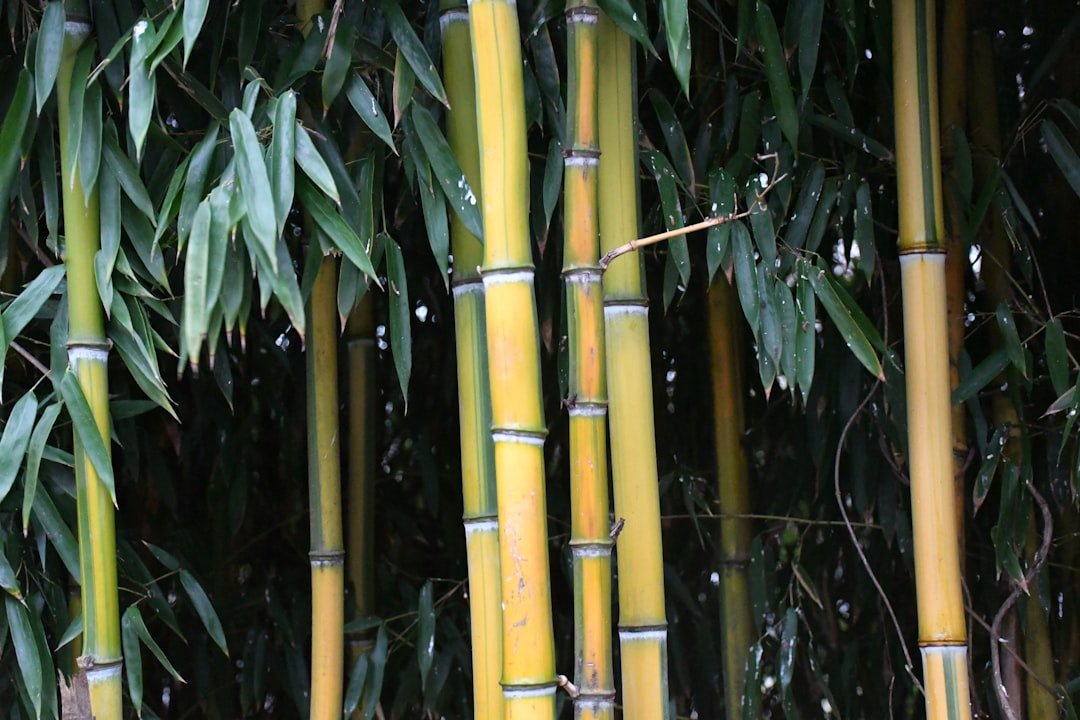
First off, let’s break down what we mean by bamboo home accessories. These are everyday items crafted—fully or in part—from bamboo. The plant itself is crazy fast-growing, reaching maturity in 3–5 years, versus decades for hardwoods.
Common categories include:
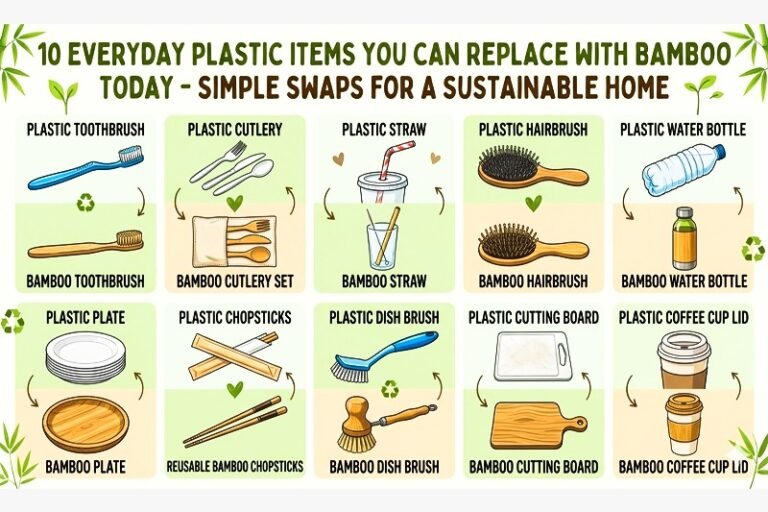
- Tableware: plates, bowls, utensils
- Bathroom gear: toothbrushes, soap dishes
- Home décor: trays, organisers, plant pots
- Furniture accents: side tables, shelf inserts
Why bamboo? It’s renewable, strong, naturally antibacterial and has a lovely grain. Plus, most bamboo products are finished with food-safe lacquers or resins, avoiding nasty chemicals.
Bamboo vs. Traditional Materials
| Feature | Plastic | Bamboo | Hardwood |
|---|---|---|---|
| Renewability | Non-renewable (oil-based) | Fast-renewable (3–5 years) | Slow-renewable (20+ years) |
| Chemical leaching | High risk (BPA, phthalates) | Low (food-safe finishes) | Medium (treated woods) |
| Biodegradability | No | Yes (compostable) | Yes (depending on finish) |
| Antibacterial | No | Yes | No |
Health Benefits of Bamboo for Kids
When you’re a parent, safety is the top priority. Bamboo home accessories tick boxes we often miss:
-
Non-toxic surfaces
Most bamboo items use natural oils or water-based coatings. No BPA, PVC or phthalates. That means fewer irritants when your little one chews or plays. -
Antibacterial properties
Bamboo naturally resists bacterial growth. Perfect for kids who love tactile textures—spoons, teethers, building blocks. -
Hypoallergenic
No synthetic dyes or glues. If junior has sensitive skin, bamboo’s gentle profile is a win. -
Durability
Bamboo is surprisingly tough. It withstands drops and drops of little ones’ playtime.
“Switching to bamboo plates reduced my toddler’s skin rashes,” says Emma, mum of two in London.
Real-Life Example
My niece refused plastic plates—she hated the noise. We swapped to bamboo home accessories: her new bamboo cup didn’t clatter, and she was more relaxed at mealtimes. Bonus: clean-up was a breeze.
Environmental Impact of Bamboo Products
Bamboo’s eco-cred isn’t just marketing. Here’s why bamboo home accessories are planet-friendly:
-
Rapid growth
Bamboo can shoot up a metre a day. No need for deforestation of ancient woodlands. -
Carbon sequestration
Bamboo groves absorb more CO₂ than equivalent trees. They’re mini carbon sinks. -
Low water use
Unlike cotton or some woods, bamboo thrives with little irrigation. -
Soil protection
Its root network prevents soil erosion, keeping habitats intact. -
Waste reduction
Bamboo products are compostable. No more plastic piling in landfills.
In India alone, sustainable goods are projected to reach a $50 billion market by 2023, with bamboo leading the pack. That’s huge momentum. By choosing bamboo home accessories, you’re riding a wave of conscious consumerism—and pushing it forward.
Discover Aegle Sriphal’s Bamboo Homeware
Choosing Safe Bamboo Home Accessories
Not all bamboo is created equal. Here’s how to pick responsibly:
- Look for FSC or PEFC certification. Means the bamboo is sustainably sourced.
- Check for food-safe finishes. No synthetic resins or formaldehyde.
- Ask about country of origin. Some regions overuse pesticides.
- Prefer single-piece designs. Fewer joints means less glue.
- Read reviews for durability. Kids can be rough.
Care Tips
- Hand-wash with mild detergent.
- Avoid soaking in water for hours.
- Dry thoroughly to prevent mould.
- Reapply food-safe oil (like coconut) every few months.
Aegle Sriphal’s Bamboo Collection
Aegle Sriphal stands out by combining design, ethics and education. Their USPs:
- 100% natural bamboo homeware, free from nasty chemicals.
- Eco-friendly production methods—from milling to finishing.
- Innovative designs: think stackable trays, modular organisers.
- Plantable pencils that sprout herbs, tying you back to nature.
- Community engagement pieces, like workshops on sustainable living.
Got a small business? Check out Maggie’s AutoBlog, their AI-powered platform that generates SEO-rich content for eco-brands. It’s high-priority, user-friendly, and perfect for SMEs keen to boost online visibility without hiring a full team.
Practical Tips to Integrate Bamboo Accessories
Ready to switch? Here are steps to weave bamboo into your daily routine:
- Start small
Swap one item a month: maybe a bamboo toothbrush or a plate. - Rotate pieces
Try bamboo storage baskets in the playroom. They’re light, sturdy, and look great. - Mix materials
Combine bamboo with jute rugs or cotton linens for a layered, natural vibe. - Educate kids
Show little ones how their plantable pencil transforms into a basil shoot. It’s learning in action. - Host a swap party
Invite friends to trade plastic toys for bamboo toys. Make it fun: prizes for the most creative swap.
Pro tip: Use leftover bamboo cups as mini plant pots on windowsills.
Conclusion
Choosing bamboo home accessories isn’t just a trend. It’s a commitment to safer homes and a healthier planet. From non-toxic plates to antibacterial toothbrushes, bamboo items tick every box for families. And with Aegle Sriphal’s eco-innovations—like bamboo homeware and Maggie’s AutoBlog for SMEs—you get ethics, quality and community in one package.
Take the leap. Replace that plastic gear. Let your little ones grow up with products that care for them and the Earth.