Why Ditching Flimsy Plastic for Reusable Bamboo Cutlery Changes Everything
We have all been there. You sit down at your office desk with a warm lunch, or unpack a picnic spread in the park, only to have a flimsy white plastic fork snap directly in half on the first bite. Worse still, takeaway cutlery creates piles of non-recyclable rubbish that linger in landfills for centuries. Switching to reusable bamboo cutlery provides an immediate, elegant fix that feels sturdy in your hands, weighs practically nothing in your bag, and cuts out single-use plastics entirely.
Carrying your own utensils transforms dining on the go from a frustrating compromise into a conscious, elevated habit. In this buying guide, we break down what utensils you actually need for daily lunches and weekend trips across India and South Asia, how natural bamboo performs against everyday meals, and how to maintain your kit so it lasts for years. To upgrade your midday routine straight away, explore how reusable bamboo cutlery can replace plastic waste in your daily life.
What Does a Practical Bamboo Cutlery Set Actually Include?
When looking at portable dining kits, bigger is not always better. A kit packed with twelve niche tools just adds bulk to your laptop bag or picnic hamper. A functional, travel-ready kit focuses strictly on the pieces you will actually reach for:
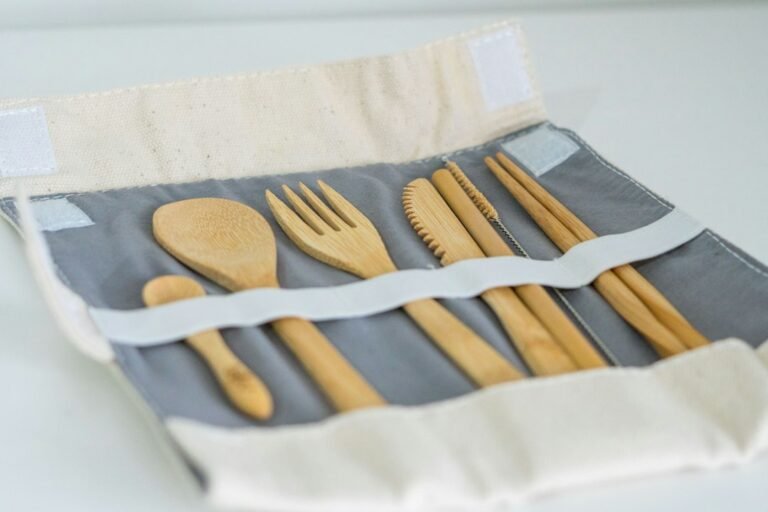
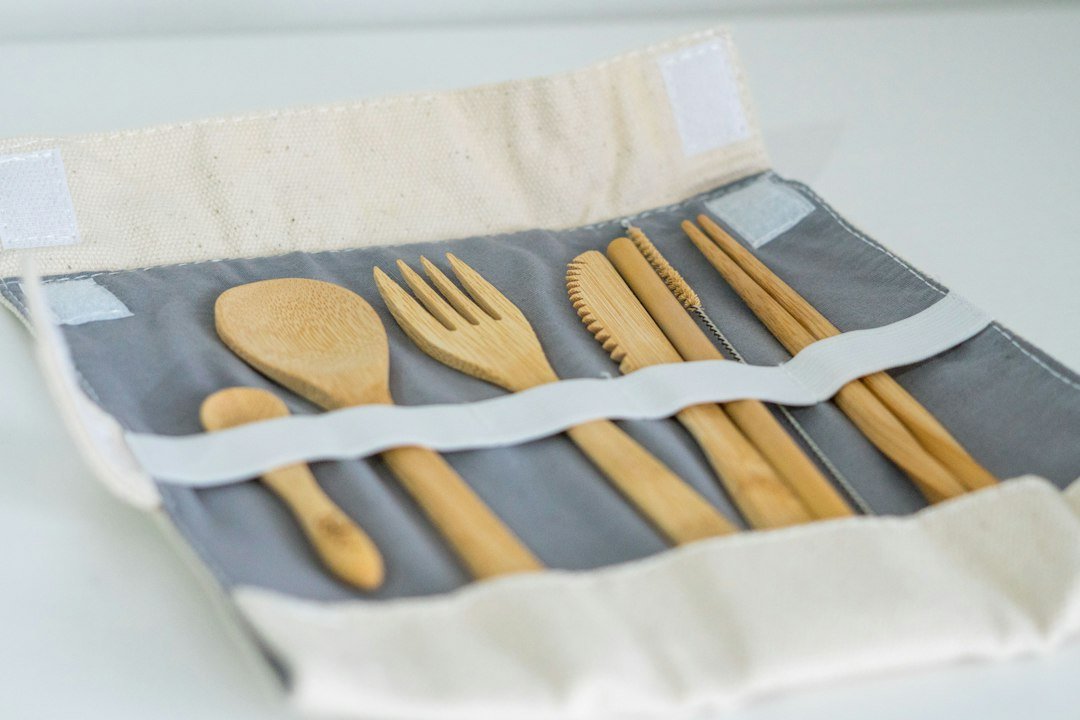
- The Bamboo Fork: Unlike soft plastic forks that bend under pressure, a well-crafted bamboo fork features tapered tines strong enough to handle salads, noodles, and cut fruits.
- The Bamboo Spoon: Deep enough for lentil curries, soups, yoghurt, and rice dishes, giving you a smooth mouthfeel without the unpleasant metallic taste of steel.
- The Bamboo Serrated Knife: While it will not carve through bone, a good bamboo blade easily slices through vegetables, cheeses, parathas, and sandwiches.
- The Bamboo Straw and Cleaning Brush: Perfect for fresh juices, coconut water, or iced tea, paired with a small bristled wire brush to keep the interior spotless.
- A Breathable Carrying Pouch: Usually made of cotton or jute, keeping your utensils together, hygienic, and separated from the rest of your bag’s contents.
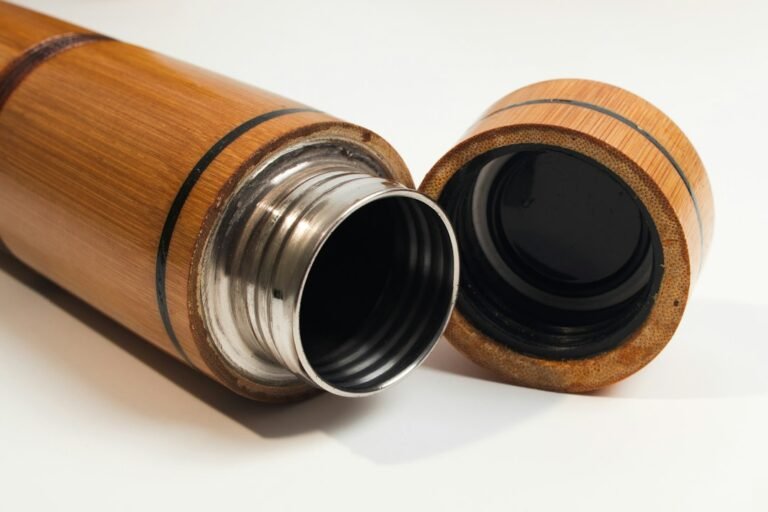
If you are packing for a full day out, carrying personal utensils is only the start. Pairing your set with a dedicated hydration container, like a bamboo water bottle, ensures you skip single-use plastics from your morning commute until your evening return.
Scenario 1: Packing for Office Lunches in India
Office dining presents unique challenges. Indian lunches often feature rich gravies, aromatic oils, turmeric, and varying temperatures. Here is what to consider when buying for your workday:
Stain Resistance and Turmeric
Turmeric and deep spices can temporarily tint raw wood. Quality bamboo utensils have a dense grain that resists deep staining better than standard porous woods, but minor discolouration over time is natural. Rinsing your spoon promptly after eating dal or curry keeps it looking fresh.
Noise-Free Dining
Stainless steel cutlery clattering against glass containers or ceramic plates inside an open-plan office can be distracting. Bamboo makes almost no sound when scooping from steel tiffin boxes or glass meal-prep bowls, making your desk lunch discreet and peaceful.
Compact Storage
Desk real estate is precious. A slim roll-up pouch fits neatly into a laptop compartment or desk drawer without rattling around. You can read more about building practical low-waste office habits in our article on reusable everyday essentials in India.
Scenario 2: Weekend Picnics and Outdoor Travel
Packing for outdoor dining requires gear that is tough, lightweight, and easy to clean without running water:
(Comparison of portable cutlery materials for outdoor dining)
When trekking, camping, or relaxing at a community park, shaving weight off your backpack matters. Steel sets weigh down your tote, while bamboo gives you durability without the drag. Furthermore, bamboo does not conduct heat; you will never burn your fingers or lips eating hot food directly from a camp pot.
For full weekend getaways where personal grooming and meal items need to stay organised, picking up a complete bamboo travel kit provides a cohesive, plastic-free solution for your luggage.
Materials Matter: Why Bamboo Outperforms Other Reusables
Why choose bamboo over metal, heavy plastics, or treated timber?
Bamboo is a fast-growing grass, not a tree. It matures in just three to five years without requiring synthetic fertilisers or pesticides. When harvested, the root system stays intact, preventing soil erosion and allowing the plant to regenerate quickly.
Unlike bioplastics, which often require industrial composting facilities that rarely exist across South Asian municipalities, pure bamboo returns to the earth naturally at the end of its lifecycle. It contains natural antimicrobial bio-agents, commonly referred to as “bamboo kun”, which help resist bacteria growth when properly dried.
If you are curious about the technical differences in sustainable material production, take a look at how we analyse the science behind sustainable bamboo materials for daily goods.
When you are ready to make the switch for your daily dining needs, you can choose reusable cutlery for lunches and picnics and see the tactile difference for yourself.
Essential Buying Checklist for Reusable Bamboo Cutlery
Before ordering a set for your home or workplace, run through this quick checklist to ensure you get high utility and safe materials:
- Finish and Polish: Ensure the utensils are treated with food-grade vegetable oils rather than chemical varnishes or synthetic lacquers. You want smooth surfaces with no rough splinters.
- Spoon Depth: Many cheap sets feature completely flat paddles that cannot hold soup or curry. Look for an ergonomic, hollowed bowl.
- Sturdy Tines: Fork prongs should be distinct and sharpened enough to spear crisp fruit without snapping under moderate pressure.
- Breathable Pouch Material: Avoid synthetic nylon wraps that trap moisture. Opt for canvas, linen, or a durable cotton sleeve.
- Total Weight: The entire kit with pouch should weigh under 100 grams for easy, unnoticeable everyday carry.
Limitations: Where Bamboo Needs Care
Honesty matters: natural materials require slightly different habits than indestructible, chemical-laden plastics or industrial steel. Here is what to keep in mind:
1. Dishwashers Are Off-Limits
The intense heat, harsh detergents, and prolonged soaking inside dishwashers will warp and crack natural bamboo fibres. Always hand wash your pieces with mild soap.
2. Never Leave Them Soaking
Submerging your cutlery in a sink full of water for hours weakens the cellulose structure and invites mould. Wash them promptly, wipe them with a towel, and let them air dry completely before rolling them back into their travel pouch.
3. Not Built for Heavy Prying
A bamboo knife will easily glide through paneer, boiled potatoes, cucumbers, and bread. However, do not use it to pry open tins or cut through dense, frozen foods.
Daily Care and Maintenance Guide
Maintaining your bamboo cutlery takes less than sixty seconds. Follow these simple steps to keep your set looking and performing like new:
- Wash: Use warm water, a soft cloth or sponge, and standard gentle dish soap. Avoid abrasive scrubbers that score the wood grain.
- Dry: Pat dry immediately with a clean kitchen towel. Do not pack moist cutlery into a closed fabric pouch.
- Aerate: Leave the pieces out on a drying rack for a short while before storing them.
- Recondition: Every few months, if the bamboo starts looking dry or chalky, rub a few drops of coconut or food-grade mineral oil across the surface using a soft cloth. Let it absorb overnight to restore its natural lustre and water repellency.
For a broader perspective on swapping single-use kitchen items for natural alternatives, explore our practical guide on how to ditch single-use plastic across your routine.
Sustainable Workday Pairings
Eating mindfully often inspires broader adjustments to your daily gear. Once you have eliminated disposable cutlery from your lunch bag, look at the other items you use between 9 and 5:
- Hydration: Pair your utensils with an insulated flask to keep water cool or tea warm during long commutes.
- Daily Errands: Carry a compact jute tote bag for quick grocery runs after work rather than collecting polythene bags.
- Conscious Stationery: Complement your plastic-free lunch desk setup with everyday tools made from responsible resources, such as a sturdy cork notebook for meeting notes and plans.
Frequently Asked Questions
Can I carry bamboo cutlery in my flight hand luggage?
Yes. Unlike metal knives and forks, which are frequently confiscated at airport security checkpoints across India and international hubs, blunt bamboo cutlery sets are generally permitted in cabin baggage. Always check local airline guidelines if you are uncertain.
How long does a bamboo cutlery set last?
With proper hand washing and regular air-drying, a high-quality bamboo set will last between two to three years of daily use. Once it reaches the end of its life, it can be composted in your garden soil.
Does bamboo leave a woody taste in your mouth?
High-grade bamboo that has been smoothly polished and cured does not impart any woody flavour or odour to your food, offering a completely neutral dining experience.
Make the Simple Swap Today
Reducing daily waste does not require radical lifestyle overhauls. Often, the most impactful environmental decisions come down to simple swaps: refusing single-use takeaway spoons, keeping a dedicated travel kit inside your daily bag, and enjoying meals with natural tools designed to last.
Ready to upgrade your picnic basket or office tiffin? Take a decisive step towards low-impact living and view the bamboo cutlery set to enjoy effortless, zero-waste dining wherever your schedule takes you.