Meta Description: Compare bamboo, jute, and cork flooring with synthetic alternatives to discover eco-friendly, durable, and stylish options for your home.
Why Choose Natural Fiber for Your Eco-Friendly Floor Covering?
Have you ever wondered what makes an eco-friendly floor covering truly green? It’s more than just the look. Natural fibers like bamboo, jute, and cork offer:
- Renewable sourcing and low-impact production
- Biodegradability at end of life
- Unique textures and warm aesthetics
- Improved indoor air quality (no harsh chemicals)
Traditional synthetic carpets may win on price or stain resistance. Yet if you want an eco-friendly floor covering that aligns with sustainability goals, natural fibers take the lead. Let’s explore each option.
Bamboo Flooring: Fast-Growing Strength
Bamboo is technically a grass. It’s one of the fastest-growing plants on earth. Here’s why bamboo shines as an eco-friendly floor covering:
Advantages
- Durability: Strand-woven bamboo rivals hardwood in hardness.
- Renewable: Harvested responsibly every 3–5 years with minimal replanting.
- Style: Available in light, caramel or carbonised dark tones.
- Moisture resistance: Better than traditional hardwood in humid rooms.
Things to Watch
- Quality variation: Always choose FSC-certified for true sustainability.
- Cost: Mid-range pricing—but a long-lasting investment.
- Installation: Requires acclimatisation to avoid warping.
Pro Tip
Opt for click-lock bamboo planks. They’re easier to install as a DIY eco-friendly floor covering, and you avoid toxic adhesives.
Jute Flooring: Soft, Rustic, Biodegradable
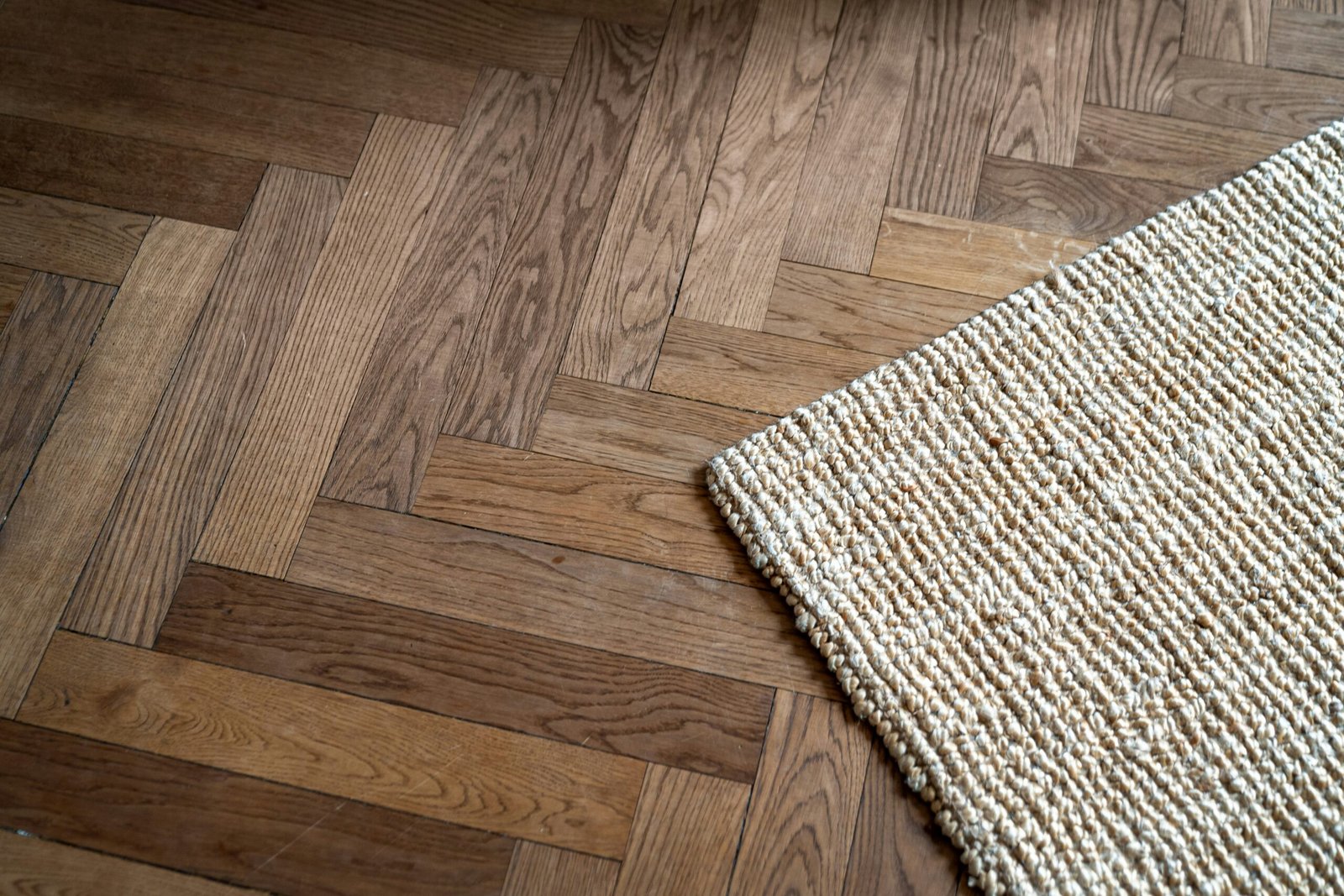
Jute is a byproduct of vegetable fibre processing, and it’s 100% biodegradable. A great pick for an eco-friendly floor covering in low-traffic spaces.
Advantages
- Texture: Soft underfoot with a natural linen-like feel.
- Acoustic: Absorbs sound, ideal for bedrooms or studies.
- Affordable: Lower cost than wool or cork.
- Eco footprint: Low energy and water usage in production.
Drawbacks
- Durability: Best for light-traffic zones—avoid hallways.
- Moisture: Susceptible to dampness and staining.
- Maintenance: Vacuum regularly and spot-clean gently.
Styling Tip
Pair a woven jute rug with leather or wicker furniture for a boho-chic vibe. You’ll have an eco-friendly floor covering that doubles as a design statement.
Cork Flooring: Comfort Meets Sustainability
Harvesting cork doesn’t harm the tree. The bark regenerates every 9–12 years. Cork flooring checks all boxes for an eco-friendly floor covering:
Advantages
- Cushioning: Soft on joints and reduces noise.
- Insulation: Natural thermal resistance—warmer underfoot in winter.
- Hypoallergenic: Resistant to mould, mildew and pests.
- Longevity: Can last 20+ years with proper care.
Considerations
- Cost: Higher initial outlay but long life-cycle value.
- Indentations: Furniture may leave marks; use protective pads.
- UV sensitivity: Seal properly to avoid colour fading.
Installation Insight
Use a water-based sealant for a low-VOC finish that keeps your eco-friendly floor covering safe for family and pets.
Synthetic Options: Pros, Cons, and Environmental Impact
Synthetic carpets (nylon, polyester, polypropylene) often dominate on price and stain resistance. Let’s break it down for your eco-friendly floor covering comparison:
-
Durability & Maintenance
• Excellent wear resistance in high-traffic areas
• Treated with stain protectors—easy to clean -
Environmental Drawbacks
• Petroleum-based, non-renewable materials
• Not biodegradable and may off-gas VOCs
• Microplastics shed into waterways -
Cost Perspective
• Lower upfront cost than many natural floors
• Potential replacement every 5–10 years in busy zones
While synthetics deliver on convenience, they lag behind in sustainability. That’s why natural fiber is steadily gaining market share across Europe.
Side-by-Side Comparison
- Renewability: Bamboo & cork grow back; jute regenerates with low impact; synthetics rely on finite resources.
- Biodegradability: All naturals compostable; synthetics persist in landfills.
- Comfort & Insulation: Cork wins for cushioning; jute for sound-absorption; bamboo for firm support.
- Maintenance: Bamboo & cork simple to wipe; jute needs gentle care; synthetics resist most spills.
- Price Range: Jute (lowest) → Bamboo → Cork → High-end synthetics.
Practical Tips for Installation & Care
- Acclimatise – Let planks or rolls sit in the room for 48 hours.
- Underlay – Use moisture barriers under bamboo and cork.
- Cleaning Routine
– Bamboo & cork: Dry mop + damp cloth.
– Jute: Gentle vacuum, avoid steam cleaning.
– Synthetics: Regular vacuum + mild detergent spot-clean. - Protect High-Traffic Zones – Add runners or rugs to entryways.
- Seal & Reseal – Reapply sealant on cork every 3–5 years.
Follow this guide to maximise lifespan and maintain the beauty of your eco-friendly floor covering.
Choosing the Right Eco-Friendly Floor Covering for Your Home
Ask yourself:
- Which rooms see the most footfall?
- What’s your budget for installation and upkeep?
- Do you prioritise softness, sound-insulation, or firmness?
- How important is renewable sourcing and biodegradability to you?
Match the fibre to the function. Need a moisture-resistant kitchen floor? Bamboo or sealed cork. A cosy bedroom? Jute or cork. A family lounge? Durable bamboo or a quality synthetic treated for low VOCs.
Empower Your Sustainable Business with Maggie’s AutoBlog
If you’re a small or medium enterprise in the eco-friendly floor covering market, telling your story well is vital. That’s where Maggie’s AutoBlog comes in:
- AI-powered content creation tailored to your website and offerings
- SEO and geo-targeted blog posts that boost visibility
- Fully automated workflow—no in-house content team needed
Showcase your bamboo, jute, and cork ranges. Educate customers on maintenance tips. Share installation case studies. Let Maggie’s AutoBlog handle the writing, while you focus on delivering exceptional eco flooring.
Aegle Sriphal’s Green Promise
At Aegle Sriphal, we’re more than a retailer. We’re a movement:
- 100% natural materials in every product
- Eco-friendly production that minimises waste
- Innovative designs blending form and function
- Community engagement to promote sustainable living
Explore our full range of eco-friendly homewares and learn how to build a greener tomorrow—one eco-friendly floor covering at a time.
Ready to transform your space—and your business?
Visit https://aeglesriphal.com/ to browse eco-friendly floor coverings and discover how Maggie’s AutoBlog can elevate your brand’s story.