One of the most common concerns consumers have before switching to sustainable alternatives is durability. While eco-friendly products are appreciated for environmental benefits, many people still wonder: Are bamboo products actually strong enough for daily use?
This question is especially relevant in Indian households where kitchen tools, storage items, and bathroom essentials experience heavy and frequent usage. Durability is not optional — it is essential.
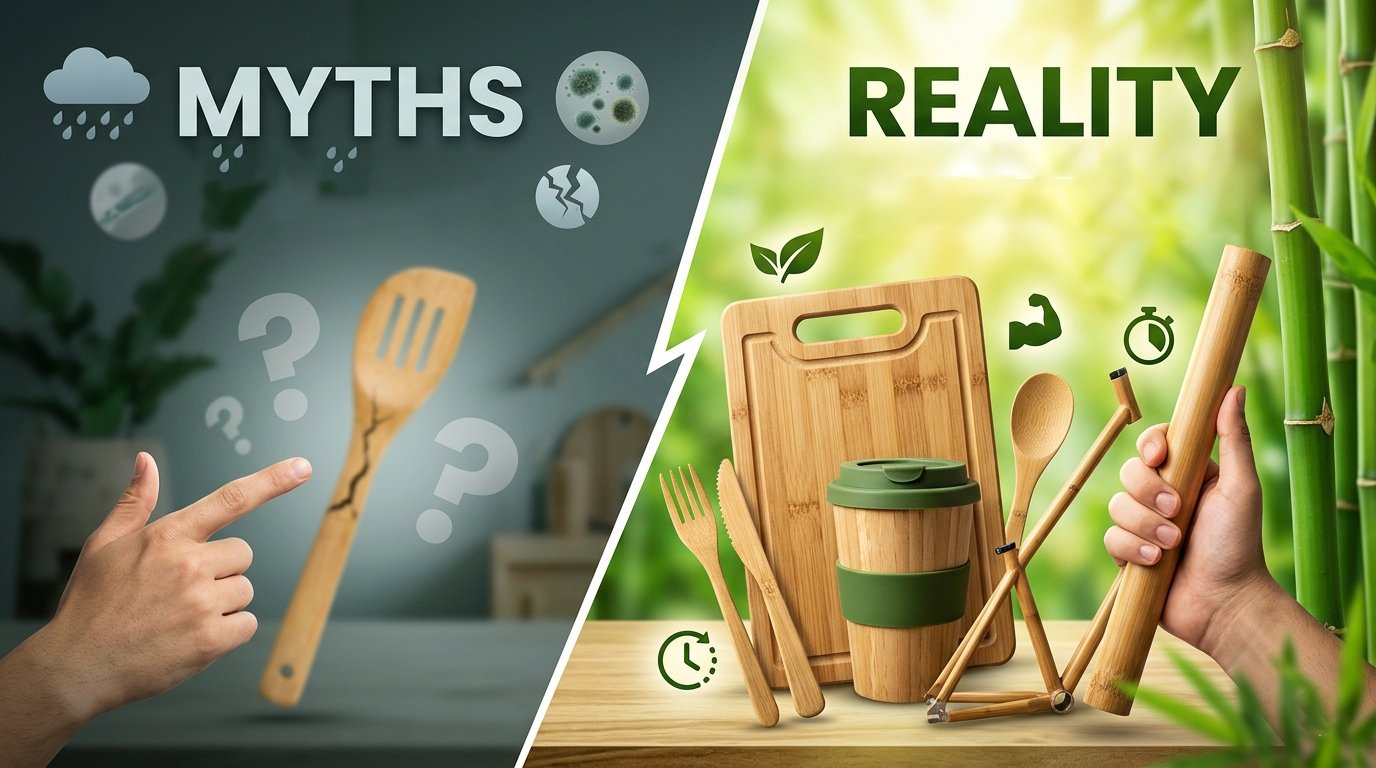
Let us separate myths from facts and understand how bamboo performs in real-life conditions.
Myth 1 – Bamboo Is Weak Because It Is “Natural”
There is a misconception that natural materials are automatically fragile. In reality, bamboo is one of the strongest plant-based materials available.
Fact
Bamboo has been used for centuries in construction, scaffolding, furniture, and flooring. Certain bamboo species have tensile strength comparable to steel by weight. Its natural fiber structure makes it both strong and flexible.
For household products such as chopping boards, spatulas, trays, organizers, and toothbrush handles, bamboo provides more than adequate structural integrity.
The strength of bamboo products depends primarily on:
- Quality of raw material
- Processing methods
- Finishing techniques
- Moisture treatment
When sourced and manufactured properly, bamboo items are highly durable.
Myth 2 – Bamboo Products Crack Easily
Another concern is cracking or splitting, especially in kitchen environments where exposure to water and temperature variation is frequent.
Fact
Like any natural material, bamboo requires basic care. Prolonged soaking in water can weaken fibers over time. However, normal washing and proper drying do not damage high-quality bamboo products.
Simple maintenance practices include:
- Avoid soaking in water for extended periods
- Dry immediately after washing
- Store in a well-ventilated space
Following these steps significantly extends product lifespan.
Myth 3 – Bamboo Cannot Handle Indian Kitchen Conditions
Indian cooking often involves high heat, oil splashes, and heavy utensil usage. Consumers worry that bamboo may not tolerate such conditions.
Fact
Bamboo kitchen tools are naturally heat-resistant and do not conduct heat like metal utensils. This makes them safe for stirring hot dishes without melting or warping, unlike low-grade plastic tools.
Additionally, bamboo does not scratch cookware surfaces as aggressively as metal alternatives.
When compared with plastic spatulas that bend or melt over time, bamboo alternatives often perform better under sustained use.
Real-Life Use Cases in Indian Homes
To better understand durability, let us look at common applications.
- Chopping Boards
Bamboo chopping boards are widely used because they:
- Resist deep knife scarring
- Are less porous than some hardwoods
- Maintain structural stability
With occasional oiling and proper drying, they can last several years.
- Kitchen Utensils
Spatulas, ladles, and tongs made from bamboo withstand daily stirring, mixing, and flipping without deformation. Unlike plastic, they do not soften under heat.
- Toothbrush Handles
Bamboo toothbrush handles are strong enough for regular brushing cycles. Since toothbrushes are replaced every few months for hygiene reasons, durability comfortably matches intended usage.
- Bathroom Organizers
Bamboo organizers perform well in bathrooms when kept dry between uses. Properly treated bamboo resists minor humidity without losing form.
Comparing Bamboo Durability to Plastic
Plastic durability varies greatly depending on quality. Cheap plastic often:
- Cracks within months
- Becomes brittle
- Stains permanently
- Warps under heat
High-quality bamboo, in contrast:
- Maintains structure
- Resists moderate impact
- Does not melt
- Ages naturally without toxic degradation
While bamboo is not waterproof like plastic, proper care offsets this limitation.
Lifespan Expectations
Product lifespan depends on usage frequency and maintenance. However, in most household scenarios:
- Bamboo kitchen tools can last several years
- Bamboo chopping boards often outlast mid-range plastic boards
- Bamboo organizers maintain form longer than thin plastic versions
Sustainability does not mean compromising durability. In many cases, it enhances it.
The Environmental Advantage of Durable Materials
Durability is not only about product performance — it is also about waste reduction.
A durable bamboo product:
- Reduces replacement frequency
- Minimizes landfill accumulation
- Lowers overall resource consumption
When consumers choose long-lasting materials, environmental impact decreases significantly.
How to Maximize Bamboo Product Life
To ensure long-term use:
- Wash with mild soap
- Avoid dishwasher cleaning
- Dry thoroughly
- Occasionally apply natural oil to chopping boards
- Store away from constant moisture
These simple steps require minimal effort but significantly improve longevity.
Final Perspective
The belief that bamboo products are fragile is largely based on misinformation or experience with low-quality items. When sourced responsibly and maintained properly, bamboo products offer reliable durability suitable for everyday Indian households.
Sustainability and strength are not opposites. Bamboo demonstrates that eco-friendly materials can also be practical, strong, and long-lasting.
Choosing bamboo is not just about reducing plastic — it is about investing in durable, responsible alternatives that align with modern conscious living.
Frequently Asked Questions
Q1: How long do bamboo kitchen tools last?
With proper care, they can last several years under normal usage.
Q2: Do bamboo products crack over time?
They may crack if soaked in water frequently, but regular washing and drying prevent this.
Q3: Is bamboo stronger than plastic?
High-quality bamboo is often stronger and more heat-resistant than low-grade plastic.
Q4: Can bamboo products handle heavy use?
Yes, especially in kitchen and household applications when maintained properly.
Q5: Do bamboo products require special maintenance?
Basic drying and occasional oiling for boards are sufficient.
Q6: Are bamboo products worth the investment?
Considering durability and environmental benefits, they offer strong long-term value.