

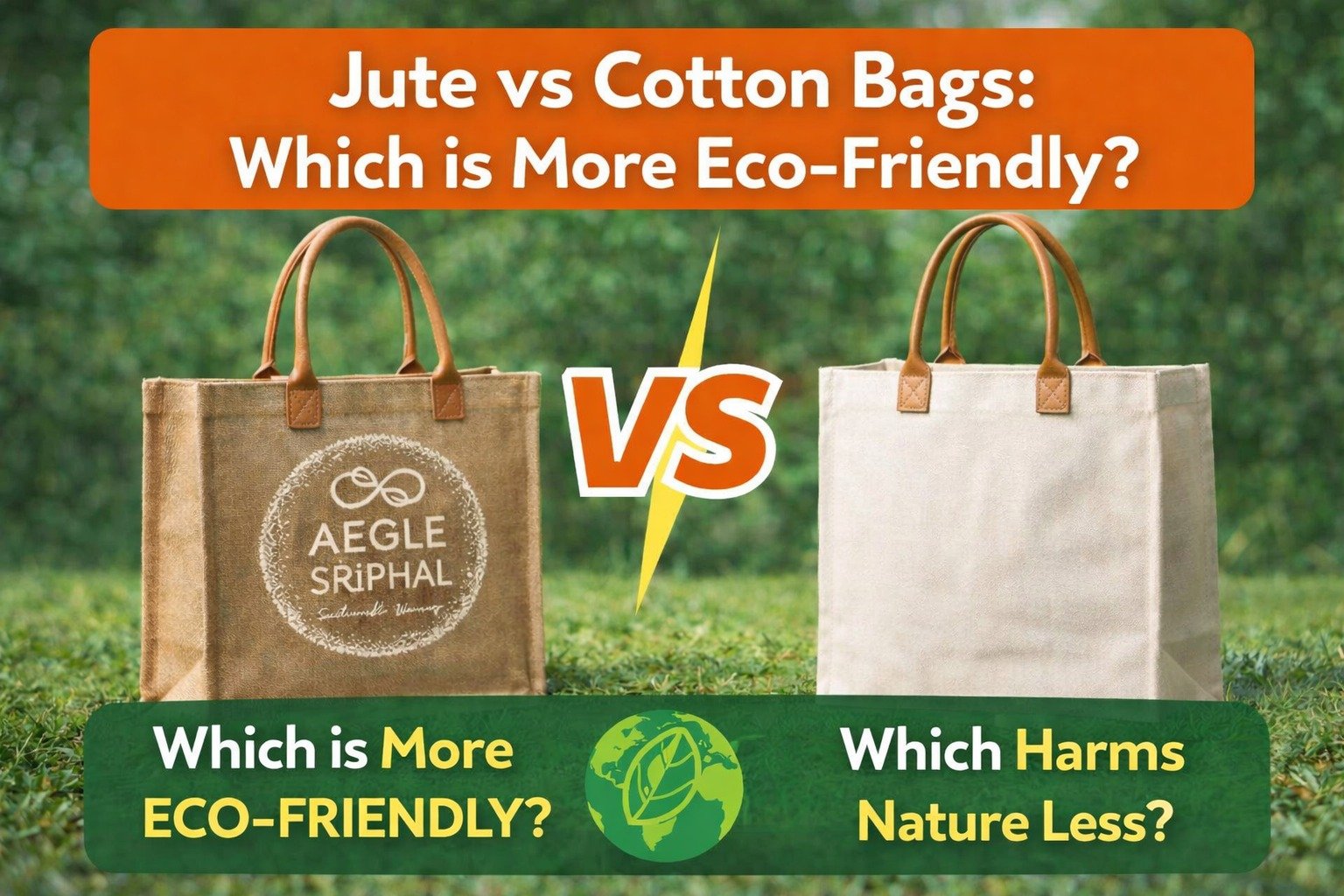
As sustainability becomes a priority for Indian households and businesses, reusable bags have replaced single-use plastic in many areas. However, consumers often face a new question: Should you choose jute bags or cotton bags?
Both are considered eco-friendly alternatives, but they differ significantly in terms of environmental impact, durability, agricultural requirements, and long-term usability.
Understanding this comparison helps buyers make informed, responsible choices rather than simply switching materials without deeper evaluation.
Understanding the Materials
What Is Jute?
Jute is a natural fiber derived from the jute plant, primarily cultivated in eastern India. It is known for its strength, coarse texture, and high tensile capacity. India is one of the largest producers of jute globally, making it locally available and economically important.
What Is Cotton?
Cotton is a soft natural fiber widely used in textiles. Cotton tote bags are popular because of their lightweight feel and washable fabric structure.
Both materials are plant-based, renewable, and biodegradable. However, sustainability depends on the full lifecycle impact.
Environmental Impact Comparison
Water Consumption
Cotton cultivation requires substantial water. Large-scale cotton farming is often linked to heavy irrigation demands.
Jute, in contrast:
- Requires significantly less water
- Grows in rain-fed conditions
- Needs fewer chemical inputs
From a water sustainability perspective, jute has a lower environmental burden.
Chemical Usage
Conventional cotton farming often involves fertilizers and pesticides. Organic cotton is better but may not always be accessible at affordable prices.
Jute cultivation typically requires fewer chemical treatments, making it a more environmentally friendly crop in traditional agricultural systems.
Carbon Footprint
Jute plants absorb considerable carbon dioxide during growth. They also improve soil fertility and prevent erosion.
While cotton also absorbs carbon, the overall production and processing footprint is often higher due to water and input requirements.
Durability and Strength
Load Capacity
Jute fibers are thicker and stronger compared to cotton fibers. This makes jute bags ideal for:
- Grocery shopping
- Carrying heavier loads
- Corporate gifting hampers
- Retail packaging
Cotton bags are better suited for lightweight items such as books, lunch boxes, or daily office essentials.
Lifespan
Jute bags generally maintain structure longer when used for heavy carrying. Cotton bags may stretch or lose shape under consistent weight stress.
If durability is the primary requirement, jute usually performs better.
Maintenance and Care
Cotton bags are easier to wash and maintain because they behave like fabric garments.
Jute bags require:
- Spot cleaning
- Avoiding prolonged soaking
- Proper drying
While cotton may seem more convenient for cleaning, jute compensates with superior strength.
Cost Comparison
Cotton tote bags are widely available in various price ranges. However, heavy-duty cotton bags can become expensive.
Jute bags offer strong durability at competitive pricing, especially for bulk purchases or commercial use.
When evaluated on cost-per-use basis, jute often provides better long-term value for heavier applications.
Aesthetic and Brand Appeal
Cotton bags offer a soft, casual appearance suitable for fashion and minimal everyday use.
Jute bags project a more natural, earthy, and sustainable aesthetic. They are widely used for:
- Corporate gifting
- Event branding
- Eco-conscious retail packaging
- Festive hampers
From a branding perspective, jute’s texture communicates sustainability more visibly than cotton.
Biodegradability
Both jute and cotton are biodegradable when untreated. However, synthetic blends reduce biodegradability.
Pure jute bags break down naturally without releasing harmful residues, making disposal environmentally safe.
Which Should Indian Consumers Choose?
The choice depends on usage intent:
- For heavy grocery carrying → Jute is preferable
- For lightweight casual use → Cotton is sufficient
- For corporate gifting → Jute offers stronger branding impact
- For eco-conscious shopping → Both are better than plastic
However, when comparing agricultural inputs, strength, and environmental efficiency, jute generally has an edge in sustainability metrics within the Indian context.
Long-Term Sustainability Perspective
Sustainability is not just about switching materials; it is about maximizing reuse.
A strong jute bag used for several years reduces the need for multiple replacements. Its durability minimizes resource consumption over time.
In a country like India, where large-scale waste management remains challenging, choosing long-lasting materials significantly contributes to environmental responsibility.
Conclusion
Both jute and cotton bags are better alternatives than plastic. However, when evaluated across water usage, durability, agricultural impact, and commercial scalability, jute bags often emerge as the more sustainable and practical choice for Indian consumers.
The key is mindful usage. The most sustainable bag is the one you reuse consistently.
By choosing durable, biodegradable options such as jute, households and businesses can contribute meaningfully to reducing plastic dependency.
Frequently Asked Questions
Q1: Is jute more eco-friendly than cotton?
In many cases, yes. Jute generally requires less water and fewer agricultural inputs than conventional cotton.
Q2: Which bag lasts longer — jute or cotton?
Jute typically lasts longer when used for heavy loads.
Q3: Are jute bags washable like cotton bags?
Jute is best spot-cleaned and should not be soaked for long periods.
Q4: Which is better for corporate gifting?
Jute bags are preferred due to strength and premium sustainable appeal.
Q5: Are both materials biodegradable?
Yes, pure untreated jute and cotton are biodegradable.
Q6: Is jute more affordable than cotton?
For heavy-duty usage and bulk orders, jute often provides better cost efficiency.


Comments (2)
Which Eco-Friendly Bag Should You Choose for Everyday Use? – Site Title
[…] for daily needs. Among the most popular choices are jute and cotton bags. When comparing jute vs cotton bags, it is essential to understand their features, durability, and environmental impact. With rising […]
Jute vs Cotton Bags: Which Eco-Friendly Bag Is Better for Daily Use? – Aegle Sriphal
[…] has increased the popularity of reusable bags worldwide. Among the most preferred options, Jute vs Cotton Bags remains one of the most searched topics by environmentally conscious consumers and businesses. […]