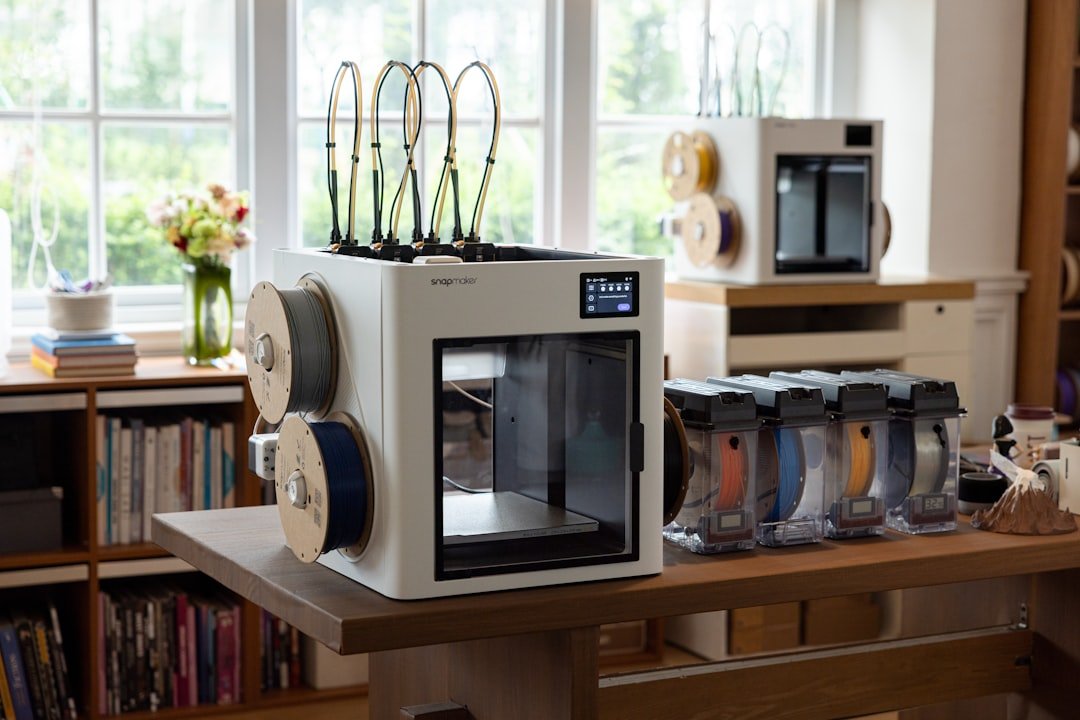
alt: Multiple 3D printers and filament spools on a table
SEO Meta Description: Discover how sustainable bamboo craftsmanship merges with 3D printed eco products to shape the future of green manufacturing and responsible design.
In a world where sustainability is no longer a buzzword but an expectation, businesses are searching for ways to reduce waste, lower carbon footprints, and delight eco-conscious customers. Enter the era of 3d printed eco products, where traditional materials like bamboo join forces with cutting-edge additive manufacturing. This fusion isn’t just a trend—it’s a blueprint for a greener tomorrow.
In this post, we’ll:
– Explore the rise of eco-filaments and their challenges
– Compare MIT CSAIL’s SustainaPrint toolkit with Aegle Sriphal’s bamboo-based approach
– Share actionable tips for SMEs ready to embrace bamboo 3D printing
Ready to dive in? Let’s get started.
The Rise of 3D Printed Eco Products
Plastic pollution has soared in recent decades. As consumers wake up to the environmental costs, demand for 3d printed eco products has surged. According to market analysis, the global green manufacturing sector is set to reach $300 billion by 2025, with Europe leading the charge. Why?
- Lower Waste: Additive manufacturing builds objects layer by layer, cutting material waste by up to 90%.
- Local Production: Designs can be printed on-demand in local hubs, reducing shipping emissions.
- Customisation: From bespoke kitchenware to personalised plant pots, 3D printing delivers unique form and function.
But there’s a catch. Most 3D printers still rely on petroleum-based filaments. Biodegradable options exist, yet they tend to break under stress. That’s where innovators step in.
Introducing the Contender: SustainaPrint by MIT CSAIL
MIT CSAIL’s researchers tackled the trade-off between strength and sustainability with SustainaPrint—a hybrid printing toolkit that:
- Analyses stress zones via Finite Element Analysis (FEA)
- Reinforces only critical areas with high-performance PLA
- Uses eco-friendly PLA elsewhere to cut plastic usage by up to 20%
- Provides an open-source testing kit for tensile and flexural strength
Strengths of SustainaPrint:
– Precise simulation.
– Meets industrial standards.
– Open-source community support.
Limitations of SustainaPrint:
– Still relies on conventional PLA, not truly natural materials.
– Dual-extrusion setups can be costly for SMEs.
– Requires manual boundary inputs and calibration.
Innovative? Absolutely. Perfect? Not quite.
Aegle Sriphal’s Natural Materials Strategy
At Aegle Sriphal, we believe sustainability means working with nature, not just reducing plastic. Our USP hinges on:
- 100% natural materials—bamboo, jute, plantable fibres
- Eco-friendly production methods that minimise energy and water use
- Innovative designs in our bamboo homeware range and plantable pencils
- Community engagement programmes that teach conscious living
We’ve built a strong brand around authenticity and environmental commitment. But we’re not stopping at handcrafted goods. We’re exploring how 3d printed eco products made with bamboo composites can deliver superior performance and minimal waste.
Side-by-Side Comparison: SustainaPrint vs. Aegle Sriphal’s Bamboo 3D Solutions
| Feature | SustainaPrint (MIT CSAIL) | Aegle Sriphal Bamboo 3D Printing |
|---|---|---|
| Material Source | Petroleum-based PLA | Bamboo fibre + natural resin binder |
| Biodegradability | Partially eco-friendly (PLA) | Fully biodegradable and compostable |
| Strength Optimisation | Reinforces stress zones (20% strong PLA) | Uniform composite strength; natural fibre synergy |
| Equipment Requirements | Dual-extrusion printer; FEA software | Single- or dual-extrusion; easy plug-and-play bamboo filament |
| Community & Education | Open-source toolkit; academic focus | Workshops, school programmes, B2B sustainability training |
| Production Footprint | Reduces plastic by ~20% | Eliminates petroleum plastic entirely |
| Product Range | Prototypes, mechanical parts, household items | Bamboo homeware, kitchen tools, planters, decor |
The verdict? While SustainaPrint shines in optimising plastic use, Aegle Sriphal’s bamboo 3d printed eco products deliver pure natural performance—no compromise on strength or sustainability.
Case Studies: Sustainable Kitchenware Reinvented
MIT CSAIL’s Hybrid Plant Pot
- Printed with 80% PolyTerra PLA + 20% Tough PLA reinforcement
- Achieved 70% of full-strength load capacity
- Still contains petroleum plastic
Aegle Sriphal’s Bamboo Composite Planter
- Printed entirely with bamboo fibre filament
- Finished by hand for water resistance
- Tested for load-bearing: supports up to 5 kg with zero plastic content
Why Bamboo?
Bamboo grows rapidly, regenerates after harvest, and sequesters carbon. When milled into fine powder and mixed with natural binder, it forms a filament that prints beautifully—retaining the wood-like grain and warmth of traditional bamboo goods.
How SMEs Can Embrace Bamboo 3D Printing
You don’t need a giant lab to get started. Here’s your 5-step plan:
- Source Bamboo Filament
– Choose suppliers offering 100% natural bamboo composites. - Select the Right Printer
– A dual-extruder works, but a single-extruder printer with manual filament swaps will do. - Design for Strength
– Use free FEA tools or simple load estimations. Reinforce corners and thin walls. - Post-Process Naturally
– Sand with fine grit, apply natural wax or oil to seal surfaces. - Engage Your Community
– Host demos, partner with eco-NGOs, or join Aegle Sriphal’s workshops to inspire conscious choices.
The result? Unique 3d printed eco products that resonate with your customers’ values—and set you apart in a crowded market.
The Future of Bamboo-Based 3D Printing
Looking ahead, we see:
- AI-Driven Stress Analysis: Automatic force inference based on geometry.
- Open-Source Filament Recipes: Custom blends for colour, flexibility, aroma.
- Distributed Micro-Factories: Local hubs co-operating to print and finish on-demand.
- Educational Kits: STEM programmes using bamboo filaments to teach material science.
Imagine a classroom where students print their own bamboo compass cases. Or a community centre producing bamboo-based walk-in planters for urban gardens. The possibilities are endless.
Sustainability isn’t a checkbox. It’s a journey—one where natural materials meet modern tech. By combining Aegle Sriphal’s 100% natural bamboo strategy with the agility of 3D printing, you can lead the charge in delivering 3d printed eco products that perform, delight, and disappear without harming the planet.
Ready to bring bamboo 3D printed eco products to your business?
Start exploring Aegle Sriphal’s sustainable solutions today:
👉 Visit Aegle Sriphal