Rethinking Daily Living: The Shift Towards True Sustainability
Ever look around your house and wonder how much plastic you touch before breakfast? Toothbrush, soap dispenser, coffee tub, food wrap, pen casing. It adds up fast. Most of us want to tread lighter, but modern convenience constantly pushes synthetic materials into our hands. The off-grid community figured out long ago that true self-reliance starts by questioning every single input and output in your living space. You do not have to move into a remote cabin in the woods to adopt that mindset. You just need the right tools, habits, and mindset shifts to cut waste at the root.
Building a low-impact daily routine comes down to sourcing functional goods built to regenerate rather than rot in a landfill for four centuries. By swapping disposable items for durable, plastic-free alternatives, we start fixing the broken consumption loop right at home. If you are ready to rethink your daily setup with mindful gear, explore Aegle Sriphal’s sustainable lifestyle essentials to discover practical products designed around renewability and purposeful craftsmanship across South Asia.
The Off-Grid Mindset: Lessons in Resource Discipline
Have you ever browsed discussions among off-grid cabin builders? If you spend five minutes reading their forums, you notice a pattern. Nobody talks about buying cheap plastic knick-knacks. Instead, they obsess over input versus output, resource durability, and waste cycles.
When you generate every watt of electricity from rooftop solar and haul your own rainwater, you stop being careless. You view every material entering your home as either an asset or a long-term liability.
- Every watt counts: Off-grid setups demand efficient equipment, paired with high-capacity battery banks and passive solar design.
- Every drop matters: Rainwater collection and greywater setups force you to look at water as a finite, precious loop.
- Every scrap lingers: Without municipal trash collection, conventional plastic packaging becomes an immediate physical nuisance on your property.
You can bring this exact discipline into a city apartment or a suburban home. It simply means taking a closer look at what enters your front door. If an item cannot break down naturally, get recycled cleanly, or last for years of hard use, why bring it home?
Why Natural Fibres Win: The Power of Bamboo and Jute
Mainstream retail pushed synthetic polymers because they were cheap to produce in bulk. The hidden cost, however, was massive ecological degradation. Petrochemical plastics leech toxins, break down into harmful microplastics, and persist in ecosystems indefinitely.
Natural fibres like bamboo and jute offer a clean escape from that trap. Both crops grow rapidly, need minimal pesticides, and break down completely when their useful life ends.
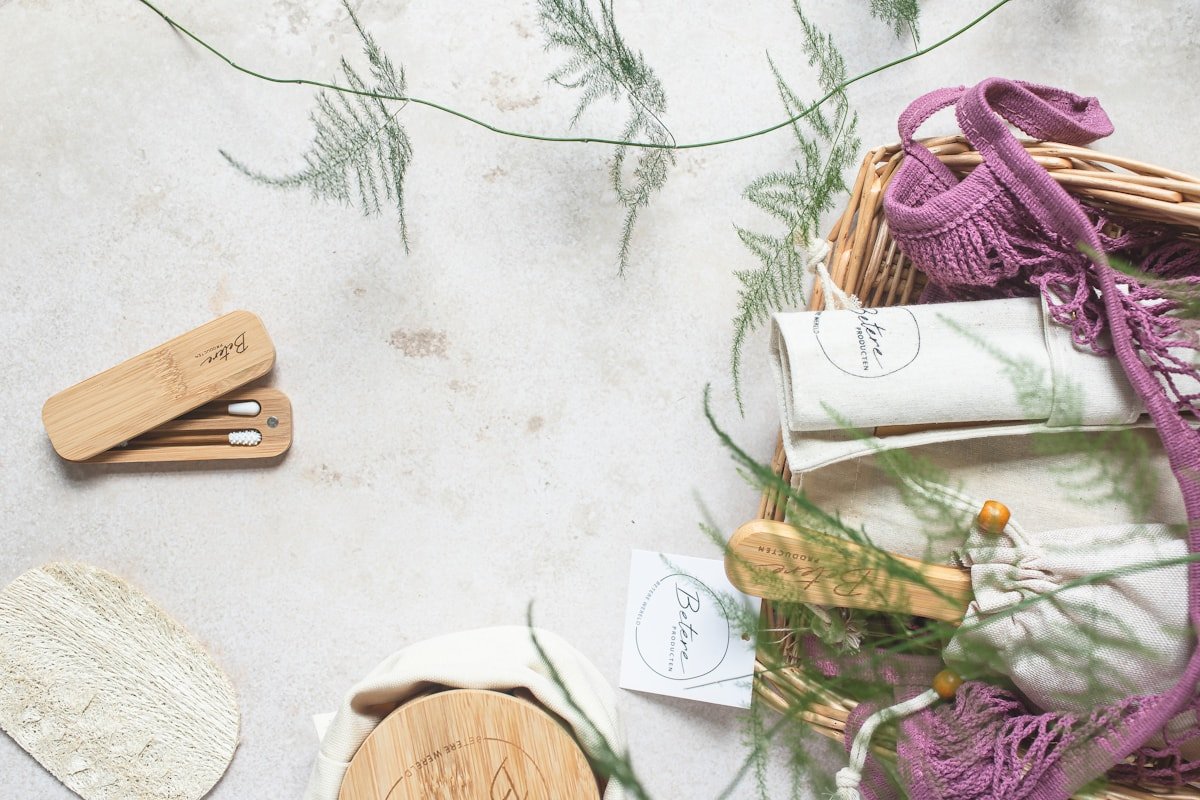
Bamboo is actually a grass, not a tree. It can shoot up several feet in a single week without stripping the soil of nutrients. Its natural tensile strength rivals steel, making it an incredible raw material for homeware, durable storage, personal grooming items, and writing utensils.
Jute, often called the “golden fibre,” thrives in the fertile plains of South Asia. It requires almost no synthetic fertilisers, absorbs massive amounts of carbon dioxide, and produces strong, biodegradable weaves. When you choose jute bags and wraps over nylon or polypropylene, you support soil regeneration and local farming communities simultaneously.
Everyday Swaps That Actually Make a Dent
Most sustainable lifestyle advice sounds intimidating. People tell you to overhaul your entire pantry overnight or build a composting toilet in your hallway. You do not need to turn your world upside down to make a genuine difference. Focus on high-frequency, everyday objects instead.
1. The Morning Routine
Swap out plastic-handled toothbrushes and synthetic liquid soap bottles. Solid soap bars, bamboo hairbrushes, and plant-based grooming tools eliminate recurring bathroom waste. They look better on your counter, too.
2. Mindful Workspaces
Think about your desk. How many cheap plastic ballpoint pens have you tossed into the rubbish bin this year? Plantable pencils and bamboo-encased stationery rewrite that dynamic entirely. When a plantable pencil gets too short to hold comfortably, you bury the stub in a pot of soil and water it. Within days, you have fresh herbs or flowers instead of useless plastic shavings.
3. Kitchen and Pantry Storage
Ditch cling film, plastic zip pouches, and flimsy storage tubs. Replace them with breathable jute sacks for dry produce like potatoes and onions, alongside durable bamboo homeware. Jute naturally allows air circulation, which prevents moisture build-up and keeps root vegetables fresh much longer.
Making these deliberate changes creates a clean, calm living environment. To discover how regional, earth-first materials can transform your daily environment, check out the collection of sustainable lifestyle essentials crafted by Aegle Sriphal and see how simple plastic-free living can be.
Moving Past Superficial Greenwashing
Let us be completely honest for a second. The green marketplace has a noise problem. Plenty of mainstream brands paint their plastic bottles green, slap a leaf graphic on the box, and call it eco-friendly. That is not sustainability; it is marketing camouflage.
True ecological transformation demands complete transparency in how materials are sourced, processed, and disposed of.
| Feature | Conventional Consumer Goods | Truly Sustainable Alternatives |
|---|---|---|
| Primary Material | Virgin petrochemical plastics | Rapidly renewable bamboo and raw jute |
| Carbon Footprint | Heavy emissions from refinery and transport | Low-impact processing with regional sourcing |
| End of Life | Hundreds of years in landfill or marine ecosystems | Naturally biodegradable or compostable |
| Community Impact | Centralised corporate manufacturing profits | Support for local artisans and regional agriculture |
| Lifespan Philosophy | Planned obsolescence to force repeat buys | Built for longevity, reuse, or circular regeneration |
When evaluating sustainable lifestyle essentials, look past the front label. Ask practical questions. Where was the raw fibre grown? Can the product return safely to the soil? Is the packaging made of unbleached paper or wrapped in plastic film? Authentic brands build their manufacturing processes around these answers from day one.
Regional Action: Why Local Context Matters
Sustainability is not a one-size-fits-all formula imported from overseas. The ecological challenges facing India and wider South Asia require locally grounded answers. Importing heavy glass containers or niche eco-gadgets across oceans burns jet fuel and drives up emissions, which completely undermines the original intent.
The smartest path forward relies on native resources that have served communities for generations. In South Asia, bamboo and jute are not novel, trendy experiments; they are foundational, time-tested materials woven into regional history.
By scaling up modern, functional designs built around these indigenous fibres, regional makers can tackle waste management issues directly. Furthermore, pairing these products with educational outreach in schools, universities, and businesses helps build grassroots environmental literacy. When people understand the lifecycle of what they buy, conscious choices become second nature.
Setting Up Your Low-Impact Habit System
Changing habits can feel overwhelming if you try to do everything at once. The secret lies in simple, friction-free systems.
First, do an audit of your rubbish bin at the end of the week. What fills it fastest? Is it food packaging? Disposable coffee cups? Single-use plastic pens? Identify the single biggest category of waste in your household and tackle only that category for the next thirty days.
Second, avoid the temptation to throw away perfectly usable plastic items just to buy aesthetic eco-friendly replacements. That defeats the entire purpose. Use your current belongings until they wear out completely. Once an item reaches the end of its useful road, replace it permanently with a biodegradable, natural alternative.
Third, share what works with the people around you. Give plantable pencils to colleagues, bring extra jute totes to the local market for neighbours, and show friends that sustainable living is practical, sturdy, and accessible. Real momentum builds through quiet, steady example.
Take your next step toward mindful living today by exploring the regional, eco-friendly innovations in Aegle Sriphal’s sustainable lifestyle essentials, and help shape a cleaner, more resilient tomorrow.